Last Updated on 30th January 2026 by Charlie Walsh
Using the right lube with tech-based sex toys isn’t just about enhancing pleasure—it’s about protecting your investment, preserving your body’s health, and maximizing sensation. In this guide, we explore which lubricants work best with different sex toy materials (from silicone to metal), break down popular lube types (water-based, silicone-based, hybrid, and more), and offer practical compatibility tips for tech-enhanced toys. Whether you’re exploring smart vibrators, anal plugs, cock rings, or even penis pumps, this article has you covered.
We’ll also touch on ingredient safety, how to avoid toy degradation, and what to look for if you have sensitive skin or specific material concerns. Whether you’re a beginner or a seasoned pro, this guide ensures you’re never guessing in the bedroom again.
The Overlooked Essential: Choosing the Right Lube for Tech-Enhanced Toys
Sex toys have come a long way—literally and figuratively. From app-controlled vibrators to penis pumps like the HydroXtreme, today’s options are tech-forward and more stimulating than ever. But with high-end toys comes one non-negotiable: the right lubricant.
“Think of lube like software for your hardware. The wrong one can crash the system—permanently.”
Many assume any slippery substance will do, but pairing the wrong lube with your favorite gadget can result in melting materials, bacterial buildup, or worse, toxic chemical reactions.
Understanding the Core Lube Types
Before matching lubes to specific toys, let’s break down the four main categories most users encounter:
1. Water-Based Lubricants – The All-Around MVP
- Best for: Nearly all materials, including silicone sex toys, ABS plastic, glass, ceramic, and more.
- Pros: Easy to clean, condom-compatible, and typically pH-balanced.
- Cons: Tends to dry out faster, especially during long sessions or underwater play.
If you’re using a water chamber device like the Hydro7 pump, a water-based lube is your safest and easiest bet. It rinses clean and won’t clog valves or internal chambers.
2. Silicone-Based Lubricants – For Long-Lasting, Slippery Play
- Best for: Glass, metal, acrylic, PVC, and latex.
- Avoid with: Silicone, TPE, and TPR toys—it can degrade their surface and turn them gummy.
- Pros: Doesn’t dry out; stain-resistant; ideal for shower play.
- Cons: Tougher to clean and not compatible with many high-tech silicone toys.
If you’re exploring external stimulation with something like a vibrating cock ring, silicone lube can feel ultra-smooth—but only if your toy isn’t made of silicone.
3. Hybrid Lubes – The Best of Both Worlds?
- A combo of: Water and silicone.
- Best for: Those who want a bit more glide than water alone, without committing to full silicone-based products.
- Note: Still not compatible with silicone toys, so double-check your toy’s material.
Hybrid lubes pair beautifully with hard-surface accessories like those found in our Bathmate Accessories collection, but avoid them for any soft, skin-like material.
4. Oil-Based Lubes – For Specific Situations
- Best for: Long sessions and toys made of metal, glass, ceramic, and acrylic.
- Avoid with: Latex condoms, silicone, and anything with a porous surface.
- Pros: Super slick and long-lasting.
- Cons: Stains fabrics, not body-friendly for vaginal use, and can trap bacteria in porous toys.
Some advanced users turn to oil-based lubes for anal toys or extended edging sessions, particularly with durable gadgets that can handle the slicker formula.
Matching Lubes to Toy Materials
One of the most common causes of toy damage? Using the wrong lube for the material. Let’s run through some pairings:
| Toy Material | Compatible Lube Types |
| Silicone | Water-based only |
| TPE / TPR | Water-based only |
| Glass | Water, silicone, hybrid, oil |
| ABS Plastic | Water, silicone, hybrid |
| Latex | Water, silicone (avoid oil) |
| PVC | Water, silicone, hybrid |
| Acrylic | Water, silicone, oil |
| PU (Polyurethane) | Water, silicone |
| Ceramic | All types |
| Metal | All types |
| Vinyl | Water, silicone, oil |
Choosing a lube isn’t just about glide—it’s about extending the lifespan of your toy. For example, many penis pumps use silicone sleeves for comfort. If you’ve invested in a deluxe system like the HydroXtreme Kit, applying a silicone-based lube directly could destroy the sleeve over time.
When Lube Meets Tech: What to Know About Smart Toys
As the industry embraces tech, toys are now app-connected, AI-assisted, and in some cases, even VR-integrated. But while innovation skyrockets, lubricant compatibility often remains stuck in the analog age.
Smart devices—especially those with charging ports, sensors, or internal motors—should only be paired with lubricants that are easy to clean and non-corrosive, typically water-based or hybrid. Avoid oily or thick silicone products that can seep into seals or impair internal components.
Smart Toy Lube Tip: If you’re using toys with electrostimulation features or advanced sensors, consider conductive lubes, which allow current to flow more evenly across the skin.
Specialty Lubes: Pleasure, Performance, and Precision
Lubes today aren’t just wet stuff in a bottle. Many are designed to stimulate, numb, or alter sensation, and that comes with benefits—and caveats—when used with high-end tech toys.
1. Warming & Cooling Lubes
These lubes often contain menthol, capsaicin, or similar agents that activate nerve endings for either a heated or tingling effect.
- Ideal for: Heightened foreplay or stimulation with G-spot and clit vibrators.
- Use caution: These are not always pH-balanced or hypoallergenic. Test them on less sensitive skin first.
- Toy safety: Stick with water-based versions if you’re using tech toys to avoid internal corrosion or sensor interference.
Pairing warming lube with water-based toys like the Hydromax Lander can intensify sensation—just ensure the formula doesn’t contain sugar or oil-based additives.
2. Numbing Lubes
Often used for anal play or to delay ejaculation, numbing lubes contain desensitizing agents like lidocaine or benzocaine.
- Best for: Butt plugs, anal toys, or prolonged penetration.
- Risks: Overuse can lead to loss of sensitivity, microtears, or hidden injury—especially dangerous when using high-pressure systems like a penis pump.
- Ingredient alert: These should be used sparingly and never with open wounds or broken skin.
If you’re experimenting with anal stimulation while using the HydroXtreme UltraMale Kit, keep numbness localized and short-term.
3. Flavored Lubes
Designed for oral sex, these come in sugary or artificial flavors.
- Pros: Fun for foreplay.
- Cons: Many contain glycerin or added sugars—a serious no-go for vaginal or anal use due to risk of yeast or bacterial infections.
- Tech-toy compatibility: Mostly irrelevant unless used during foreplay before switching to toys.
These lubes are more novelty than utility. For serious sessions with your Bathmate accessories, skip them entirely.
Ingredient Red Flags: What Not to Put Near Your Tech Toys (or Body)
It’s tempting to grab any slick product off the shelf, but the ingredients matter—both for your health and the longevity of your toys.
Key Ingredients to Avoid:
- Glycerin / Sugars: Disrupt vaginal pH and fuel infections.
- Parabens: Potential hormone disruptors.
- Nonoxynol-9: Found in spermicidal lubes; causes irritation with frequent use.
- Chlorhexidine Gluconate: An antibacterial agent that kills good bacteria too.
“If it sounds like something from a chemistry lab, it probably doesn’t belong inside your body—or on your tech.”
Bathmate Pumps and Lube: What You Need to Know
All Bathmate pumps are designed with body-safe silicone gaiters and comfort pads, meaning your lube must be compatible to preserve integrity and function.
Best Lubes to Use With:
HydroXtreme Pump
- Best match: Water-based lube
- Why: Ensures a tight seal without risking material damage or residue buildup in valves or pressure-release systems.
Hydromax Lander
- Best match: Water-based or hybrid (if silicone is avoided)
- Why: Perfect for extended sessions—hybrid can offer more glide without drying as fast.
Hydro7
- Best match: Water-based
- Why: Entry-level pump users should prioritize ease of cleanup and low irritation risk.
Note: Silicone and oil-based lubes can degrade or warp the silicone gaiters found in all Bathmate pumps, shortening product lifespan and compromising safety.
Storage, Compatibility, and Longevity: The Silent Guardians
Choosing the right lube is only one part of the equation. Aftercare and storage are just as vital.
Toy Storage Tips:
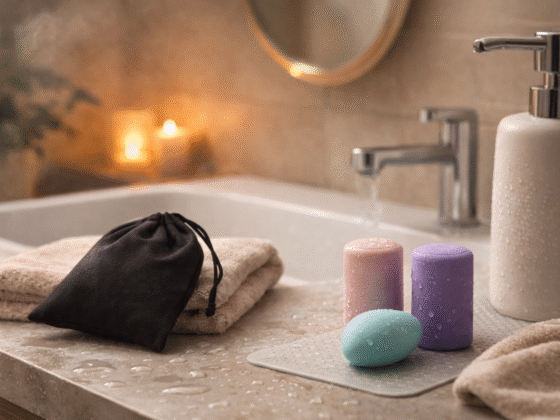
- Keep silicone toys separate – storing them together can cause fusion or melting.
- Use Tupperware, cloth bags, or individual containers for separation.
- Always clean toys before and after use, especially when using lube with preservatives.
Pro Tip: Don’t just wash with water—use a toy-safe cleanser that doesn’t interfere with sensitive materials like TPR or medical-grade silicone.
Watch for Compatibility Across the Board
Certain combinations to never make:
- Silicone lube + silicone toy = Material breakdown.
- Oil-based lube + latex condom = Condom failure.
- Hybrid lube + porous toy (TPE/TPR) = Bacterial contamination risk.
For smart toys (like app-controlled vibrators or AI-powered stroker devices), opt for FDA-approved, biodegradable, and water-based options. Many of these are now designed for sensitive skin, ensuring both safety and eco-friendliness.
Your Personal Lube Strategy: 5 Key Factors
No one lube fits every scenario. The best approach is to match your lubricant choice to the toy, the play style, and the environment.
1. Type of Play
| Play Style | Best Lube Types |
| Solo play | Water-based, hybrid |
| Anal play | Silicone-based (if toy-safe), or water-based |
| Shower play | Silicone-based (if not using silicone toys) |
| Long edging sessions | Silicone-based, oil-based (with hard materials) |
| Partner play | Water-based (condom-safe), hybrid |
| Oral-focused play | Flavored (avoid for penetrative use) |
2. Toy Material
You already know silicone lube and silicone sex toys don’t mix, but here’s a quick cheat:
If in doubt, water-based is your default.
It’s safe, easy to clean, and works with virtually every sex tech product from Fleshlights to clit vibrators, cock rings, and even your Bathmate pump.
3. Session Duration
- Quickies: Water-based works well and rinses clean.
- Extended play: Use silicone or hybrid for less friction and fewer reapplications.
- Overnight use (e.g., with wearable tech toys): Opt for long-lasting, pH-balanced lubes and avoid anything with preservatives or irritants like chlorhexidine gluconate.
Discretion and Travel: Lubes on the Go
For many tech toy users—especially fans of AI-powered sex tech or app-controlled vibrators—travel and discretion matter.
Look for:
- Lube packets or sachets: TSA-friendly and hygienic for one-time use.
- Discreet packaging lubricants: No explicit branding or language on the bottle.
- Lube dispensers: Pump-tops or lockable caps prevent leaks in luggage.
- Biodegradable lubes: Environmentally conscious and usually free of harsh chemicals.
If you’re traveling with gear like the HydroXtreme Pump, keeping a few lube travel kits on hand ensures your experience is smooth, no matter the setting.
Ready-to-Use Compatibility Checklist
Here’s your quick-reference guide for matching lubes to materials and play types:
✅ Material Compatibility Matrix
| Toy Material | Water | Silicone | Hybrid | Oil |
| Silicone | ✅ | ❌ | ❌ | ❌ |
| TPE / TPR | ✅ | ❌ | ❌ | ❌ |
| ABS Plastic | ✅ | ✅ | ✅ | ✅ |
| Glass | ✅ | ✅ | ✅ | ✅ |
| Metal | ✅ | ✅ | ✅ | ✅ |
| Ceramic | ✅ | ✅ | ✅ | ✅ |
| Acrylic | ✅ | ✅ | ✅ | ✅ |
| PVC | ✅ | ✅ | ✅ | ✅ |
| Latex | ✅ | ✅ | ✅ | ❌ |
| Vinyl | ✅ | ✅ | ✅ | ✅ |
| PU (Polyurethane) | ✅ | ✅ | ✅ | ✅ |
✅ Lube Types & Functionality
| Lube Type | Toy-Safe | Condom-Safe | Lasting Power | Best Use Case |
| Water-based | ✅ | ✅ | Moderate | Everyday, tech toys |
| Silicone-based | ⚠️ | ✅ | High | Long play, shower |
| Hybrid | ⚠️ | ✅ | High | Longer sessions, variety |
| Oil-based | ❌ | ❌ | Very high | Anal play, hard toys only |
| Flavored | ✅ | ❌ | Low | Oral only |
| Warming/Cooling | ✅ | ✅ | Moderate | Extra sensation |
| Numbing | ✅ | ✅ | Moderate | Anal, delay creams |
⚠️ Use caution: Not compatible with silicone-based or porous toys.
Final Tips for Safe and Satisfying Use
- Always read the label. Just because it’s marketed for sex doesn’t mean it’s safe for tech-based toys.
- Do a patch test. Try new lubes on your inner arm or less sensitive skin before going full throttle.
- Store toys separately. Especially soft-touch or silicone toys—store away from direct contact with each other.
- Use toy-safe cleaners. Water and soap don’t cut it when you’re dealing with precision electronics or porous toys.
- Invest in body-safe, vegan, and paraben-free formulas when possible—your body and your tech will thank you.
Conclusion: The Perfect Pairing Is in the Details
Choosing a lube might seem secondary to buying the right toy—but in reality, it’s a crucial part of the experience. The right lubricant enhances sensation, ensures safety, and preserves the integrity of your devices, especially when investing in premium tools like Bathmate penis pumps.
If you’re using advanced toys, smart vibrators, or hydro-pumps, take your time, do your research, and let your lubricant be a power-up, not a liability.
FAQ: Best Lubes for Use With Tech-Based Toys
To round out our comprehensive guide, here are answers to some of the most frequently asked questions about choosing and using lubricants with tech-based sex toys. These are questions not covered directly in the main body of the article but are vital for anyone looking to optimize both pleasure and safety.
1. Can I use coconut oil as a natural lubricant with my sex toys?
While coconut oil is often praised for its moisturizing properties and pleasant scent, it’s not recommended for most tech-based toys. It’s oil-based, meaning it can degrade latex, silicone, and TPR/TPE materials, and is not condom-safe. It can also clog mechanical parts in app-connected or vibrating devices.
2. Do all lubes have an expiration date?
Yes. Most lubes have a shelf life of 1–3 years depending on the type and whether they contain preservatives. Using expired lube can lead to reduced effectiveness, bacterial growth, or irritation. Always check the packaging and store your lube in a cool, dark place.
3. How do I clean my tech toy after using lube?
First, check your toy’s material and manufacturer instructions. In general:
- Use warm water and mild, fragrance-free soap for waterproof toys.
- For non-waterproof or electronic components, use a damp cloth and a toy-safe cleaner.
- Avoid harsh chemicals or alcohol-based products that can erode finishes or break seals.
4. Can I mix different types of lubricants together?
It’s not advised. Mixing a silicone-based lube with a water-based one, for instance, can alter the texture, reduce effectiveness, or cause unexpected reactions on the toy or skin. Stick to one lube per session to avoid issues.
5. Are there lubes specifically made for use with penis pumps?
Yes. Some water-based lubricants are marketed as being pump-safe, designed to work with the seals and comfort pads of devices like the Bathmate HydroXtreme. Look for non-sticky, long-lasting, and glycerin-free options to maintain suction and comfort.
6. Is there a difference between male and female lubes for toy use?
Functionally, no. Most lubricants are unisex and focus on material compatibility and sensation, not gender. However, some brands target different audiences with marketing or added ingredients (e.g., aloe for sensitive vaginal tissue), so always read the label.
7. Can lubricants affect a toy’s warranty?
Yes, in some cases. Using a non-recommended lube (like silicone lube on a silicone toy) can void warranties if it causes damage. Always check the product documentation, especially for smart tech devices or high-end hydro pumps.
8. Are warming lubes safe to use with penis pumps or vibrating toys?
Use with caution. While some warming lubes are water-based and safe, others may contain menthol or heating agents that can irritate sensitive tissue, especially under pressure. Always perform a patch test before full use with devices like Hydromax Lander.
9. What’s the best lube for sensitive skin when using sex tech?
Look for lubes that are:
- Glycerin-free
- Paraben-free
- Fragrance-free
- Hypoallergenic
- pH-balanced
Many natural and vegan lubricants meet these criteria and are ideal for use with both internal and external tech-based toys.
10. Can I use the same lube for anal, vaginal, and oral play with toys?
Not ideally. Each area has different pH levels, sensitivities, and needs. For example:
- Anal play requires long-lasting, thicker lubes (like silicone or water-based with high viscosity).
- Vaginal play needs pH-balanced, sugar-free lubes to avoid infection.
- Oral lubes may be flavored and often contain sweeteners, which are not safe for internal use.
Choose purpose-specific lubes and keep them separate for each type of play.