Quick Summary:
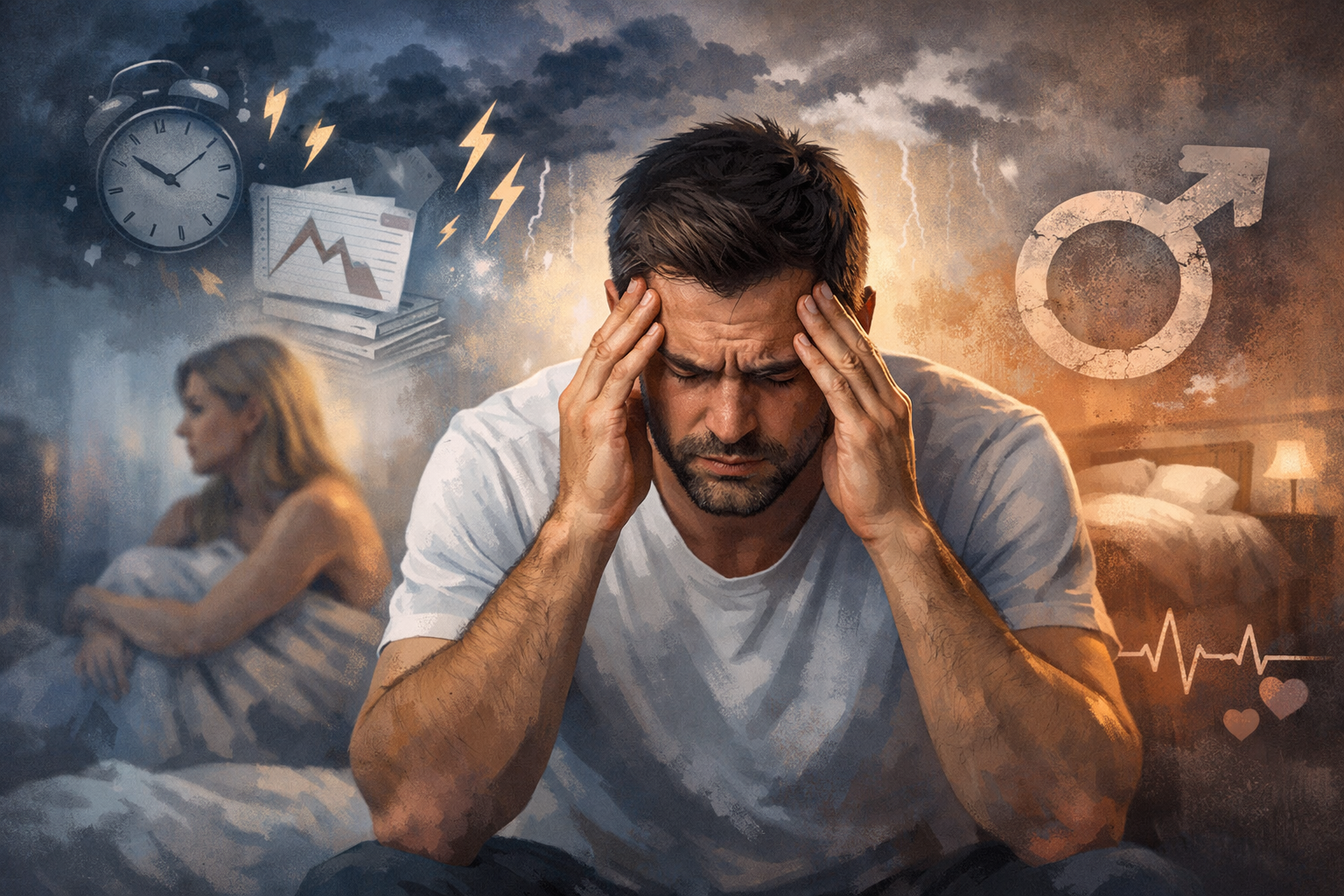
Stress doesn’t just live in your mind—it directly alters your hormones, blood flow, and sexual response. Elevated cortisol suppresses testosterone, disrupts the nervous system, and interferes with arousal, leading to reduced desire, difficulty maintaining erections, and even long-term sexual dysfunction. From work pressure to relationship strain, chronic stress can quietly erode confidence and performance. The good news? Understanding the biological and psychological mechanisms behind this process is the first step toward reversing it and restoring both libido and control.
The Silent Disruptor: Why Stress Is Killing Your Sex Drive
There’s a reason more men are searching for answers around stress and male libido—and it’s not just coincidence.
Modern life is engineered for pressure. Deadlines, financial worries, relationship tension, and constant digital stimulation all contribute to chronic stress sexual health issues that often go unnoticed until they show up in the bedroom.
At first, it might feel subtle:
- A slight drop in desire
- Less spontaneous arousal
- Occasional performance dips
But over time, the stress impact on sex drive compounds. What begins as occasional fatigue can evolve into persistent issues like:
- Reduced sex drive in men
- Difficulty maintaining erection
- Lack of sexual desire
- Even full-blown stress-related sexual dysfunction
This isn’t just psychological—it’s deeply biological.
The Hormonal Domino Effect: Cortisol vs Testosterone
At the core of the issue lies a hormonal tug-of-war.
When your body perceives stress, it activates the fight or flight sexual response, flooding your system with cortisol. While this is useful in short bursts, chronic elevation creates a damaging imbalance.
Here’s what happens inside your body:
- Cortisol rises → your body prioritizes survival over reproduction
- Testosterone drops → libido and performance decline
- Blood flow becomes restricted → erections weaken
This is the foundation of the cortisol and libido connection—and it explains why stress hormones and testosterone are so tightly linked.
When cortisol stays high for too long, it directly contributes to testosterone suppression stress, creating a physiological environment where desire struggles to exist.
This is also where the low testosterone stress link becomes impossible to ignore. Testosterone fuels sexual desire, confidence, and erectile strength. Without it, even strong mental attraction can fail to translate into physical response.
The Brain-Body Disconnect: When Arousal Stops Responding
Sexual arousal doesn’t start in the body—it starts in the brain.
And stress disrupts that process at every level.
When you’re overwhelmed, your brain shifts resources away from pleasure and toward problem-solving. This leads to:
- Stress and arousal difficulty
- Reduced sensitivity to stimulation
- Slower or weaker erectile response
In many cases, this evolves into psychological erectile dysfunction, where the body is physically capable—but the signal from the brain never fully activates.
This is why mental health and sexual performance are inseparable.
Key neurological disruptions include:
- Impaired dopamine libido connection (less motivation and pleasure)
- Overactive sympathetic nervous system libido suppression
- Increased distraction and brain fog libido
In simple terms: your body is present, but your mind isn’t cooperating.
Performance Anxiety: The Feedback Loop That Makes It Worse
Once stress begins affecting performance, a dangerous cycle often follows.
A single negative experience—like difficulty maintaining an erection—can trigger performance anxiety in men, which then amplifies the problem.
This leads to:
- Anticipation of failure
- Heightened anxiety during intimacy
- Reduced arousal and erection quality
- Reinforced fear for next time
This loop is the foundation of anxiety sexual performance issues and anxiety-induced ED.
The more you think about performance, the less your body is able to perform.
Over time, this becomes a classic case of stress and erectile dysfunction, where both psychological and physiological factors are working against you.
Blood Flow, Nerves, and the Physical Side of Stress
While much of the conversation focuses on hormones and psychology, there’s also a critical mechanical component: blood flow.
An erection depends on proper circulation and a relaxed nervous system. Stress interferes with both.
Here’s how:
- Constricted blood vessels → blood flow and erection problems
- Increased adrenaline → inhibits relaxation needed for arousal
- Reduced nitric oxide → impacts stress and nitric oxide erection
This creates what’s known as vascular erectile function stress, where the body physically struggles to respond—even if desire is still present.
The result?
- Inability to get erection stress-related
- Inconsistent performance
- Reduced firmness and stamina
Where Lifestyle Makes It Worse (Without You Realising)
Not all stress is obvious.
Many daily habits silently contribute to stress and sex drive issues, including:
- Work stress and libido imbalance from long hours
- Poor sleep leading to sleep deprivation erectile dysfunction
- Alcohol increasing stress and alcohol libido disruption
- Emotional tension causing relationship stress sex drive decline
These factors stack together, accelerating libido loss men causes far beyond what most expect.
A Practical Note on Physical Confidence and Support
While addressing stress at its root is essential, many men also look for ways to rebuild physical confidence and performance simultaneously.
Products like those found on Bathmate Direct are designed to support blood flow and erection quality, helping counteract some of the physical effects of stress on performance.
For example:
- The HydroXtreme Pump is engineered to enhance expansion and circulation
- The Hydromax Lander offers a more accessible entry point for beginners
- Advanced systems like the HydroXtreme Kit combine multiple tools for performance-focused routines
You can also explore the full range of options on the Bathmate Pumps collection or complement your setup with tools from the Bathmate Accessories page.
While these don’t address stress directly, they can play a role in restoring confidence—an important factor in breaking the stress-performance cycle.
The Bigger Picture: Why This Problem Is Increasing
If it feels like more men are struggling with libido today, it’s because they are.
Modern environments amplify:
- Chronic stress exposure
- Mental fatigue sexual dysfunction
- Constant distraction and overstimulation
All of which contribute to rising cases of:
- Depression and low sex drive
- Exhaustion and sex drive decline
- Persistent male sexual dysfunction stress
And yet, many still ask the same questions:
- Why stress lowers libido in men?
- Can stress cause erectile dysfunction?
- Does anxiety affect erections long-term?
The answer to all of them is yes—and the mechanisms are now clear.
Reversing the Damage: How to Rebuild Libido Under Stress
Understanding the problem is only half the battle. The real shift happens when you start reversing the mechanisms that stress disrupts—hormones, brain signals, and blood flow.
If stress is pulling your libido down from multiple angles, recovery has to work the same way: biological, psychological, and behavioral.
Step 1: Lower Cortisol to Restore Testosterone
The fastest way to improve stress and male libido issues is by reducing cortisol. When cortisol drops, testosterone naturally begins to recover.
This directly improves:
- Desire
- Energy levels
- Erectile strength
Practical ways to lower cortisol:
- Sleep optimisation
Poor sleep is one of the biggest drivers of stress hormones and testosterone imbalance. Aim for 7–9 hours of uninterrupted sleep to support sleep and testosterone recovery. - Resistance training
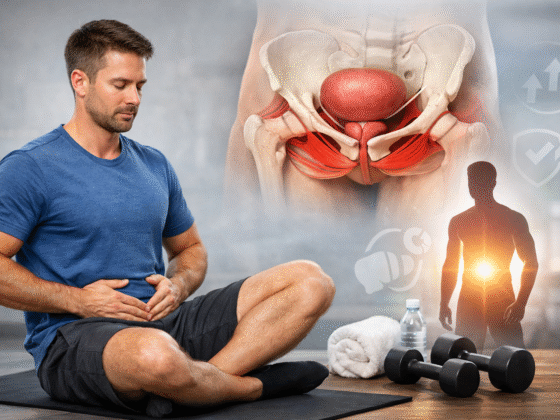
Strength training boosts testosterone while lowering chronic stress markers. - Breathing techniques
Slow breathing activates the parasympathetic system, counteracting the fight or flight sexual response.
Even small reductions in cortisol can significantly improve the cortisol testosterone libido relationship.
Step 2: Rewire the Brain for Arousal, Not Anxiety
If stress has progressed into sexual performance anxiety, the brain needs to be retrained to associate intimacy with relaxation—not pressure.
This is where psychological strategies become essential.
Effective approaches include:
- Mindfulness sexual performance training
Staying present during intimacy reduces intrusive thoughts and improves arousal. - Therapy for performance anxiety
Techniques like CBT for erectile dysfunction help break negative thought loops. - Reducing overstimulation
Constant digital input can worsen brain fog libido and dull natural arousal responses.
This step is critical for reversing psychological erectile dysfunction and restoring the dopamine libido connection.
Step 3: Restore Blood Flow and Physical Responsiveness
Even with improved hormones and mindset, the body still needs to relearn how to respond physically.
Stress often leaves behind lingering issues with:
- Circulation
- Sensitivity
- Erectile consistency
Improving vascular erectile function stress requires intentional stimulation and conditioning.
Key focus areas:
- Supporting nitric oxide production
- Encouraging consistent blood flow
- Rebuilding erection confidence
For men experiencing difficulty maintaining erection or inconsistent performance, structured physical support can make a noticeable difference.
Advanced systems like the Hydro7 are designed to enhance expansion and conditioning, while premium options such as the HydroXtreme UltraMale Kit provide a more comprehensive approach to performance training.
These tools can help counteract blood flow and erection problems, especially when stress has created long-term physical inhibition.
Step 4: Fix Lifestyle Leaks That Drain Libido
You can’t out-train or out-think a lifestyle that constantly reinforces stress.
Many cases of low libido men causes come down to overlooked daily habits.
- Sleep debt → drives fatigue and low libido
- Alcohol overuse → worsens stress and alcohol libido effects
- Poor diet → contributes to hormonal imbalance libido
- Sedentary routine → reduces circulation and energy
Even emotional patterns matter.
Unresolved tension leads to:
- Stress intimacy issues
- Reduced emotional connection libido
- Lower partner stress sexual satisfaction
Libido isn’t just physical—it’s relational, emotional, and environmental.
Step 5: Rebuild Sexual Confidence (The Missing Link)
One of the most overlooked aspects of recovery is confidence.
After repeated negative experiences, many men develop:
- Hesitation during intimacy
- Fear of underperforming
- Avoidance patterns
This reinforces anxiety and low libido in men, even when the body is physically capable again.
Rebuilding confidence requires:
- Consistent positive experiences
- Reduced pressure during intimacy
- Gradual exposure to arousal without expectation
This is how you break the cycle of performance anxiety erectile dysfunction and move toward stress and sex drive recovery.
The Recovery Timeline: What to Expect
Unlike quick fixes, reversing stress-related sexual dysfunction takes time—but progress often happens faster than expected once the right systems are in place.
Typical progression:
- Week 1–2:
Improved sleep, reduced anxiety, slight return of desire - Week 3–4:
Better erection quality, increased responsiveness - Month 2+:
Stronger libido, improved consistency, reduced anxiety
Of course, this varies depending on how long stress has been affecting your system and the severity of symptoms like:
- Inability to get erection stress-related
- Persistent lack of sexual desire
- Ongoing mental fatigue sexual dysfunction
A Shift in Perspective: From Performance to Function
One of the biggest mindset changes in recovery is this:
Stop focusing on performance. Start focusing on function.
Performance is outcome-based and pressure-driven.
Function is biological and sustainable.
When you improve:
- Hormones
- Nervous system balance
- Blood flow
- Mental state
Performance naturally follows.
The Overlooked Factor: Your Nervous System State
At the center of everything is your nervous system.
Stress keeps your body in a constant state of alert, which directly suppresses the nervous system sexual response required for arousal.
To reverse this, your body needs more time in a relaxed, parasympathetic state.
Simple ways to achieve this:
- Slow, controlled breathing
- Reduced screen time before bed
- Physical touch without performance pressure
- Time spent in low-stimulation environments
This is essential for resolving:
- Stress and arousal difficulty
- Anxiety and sexual desire conflicts
- Chronic stress impact on sex drive
Bringing It All Together
Recovering libido isn’t about a single fix—it’s about alignment.
When your:
- Hormones are balanced
- Mind is calm
- Body is responsive
Desire returns naturally.
And importantly, so does confidence.
Long-Term Optimisation: Protecting Libido in a High-Stress World
By now, the core mechanisms are clear. Stress disrupts hormones, interferes with the brain’s arousal pathways, and restricts blood flow. You’ve also seen how to begin reversing those effects.
But there’s a deeper question most men never address:
How do you maintain strong libido and performance even when stress never fully goes away?
Because the reality is—it won’t.
Modern life isn’t getting quieter. The goal isn’t to eliminate stress entirely, but to build a system where your body remains resilient despite it.
Build a Stress-Resilient Sexual System
Think of libido as a system—not a switch.
To keep that system running optimally, you need to continuously support:
- Hormonal balance
- Nervous system regulation
- Physical responsiveness
- Psychological stability
This is how you prevent recurring stress-related sexual dysfunction and avoid slipping back into cycles of stress and erectile dysfunction.
Strategy 1: Control the Baseline, Not Just the Peaks
Most people only react to stress when it becomes overwhelming. But libido is affected more by your baseline stress level than occasional spikes.
Chronic low-level tension leads to:
- Persistent stress and sex drive suppression
- Gradual testosterone suppression stress
- Ongoing mood and libido connection disruption
How to lower your baseline:
- Create consistent sleep/wake cycles
- Build daily decompression habits (walks, silence, low stimulation)
- Limit constant digital input
A calm baseline allows your body to shift into an arousal-ready state more easily.
Strategy 2: Maintain Hormonal Health Proactively
Once testosterone recovers, the goal is to keep it stable.
Ignoring this leads to recurring low testosterone stress link issues, especially during high-pressure periods.
Long-term hormonal support includes:
- Regular strength training
- Adequate dietary fats and micronutrients
- Managing body fat levels
- Prioritising deep sleep cycles
These habits directly support hormonal imbalance libido correction and protect against future decline.
Strategy 3: Keep the Mind Out of the Way
The biggest long-term threat isn’t physical—it’s mental.
Even after recovery, many men relapse into:
- Overthinking during intimacy
- Monitoring performance
- Re-triggering sexual performance anxiety
This gradually rebuilds anxiety sexual performance issues and can lead back to anxiety-induced ED.
The solution:
Shift focus away from outcome and toward experience.
- Stay present rather than evaluative
- Avoid “checking” erection quality mid-moment
- Remove pressure to perform perfectly
This protects against the return of psychological erectile dysfunction and keeps arousal pathways clear.
Strategy 4: Protect Blood Flow and Erectile Function
Even in low-stress periods, maintaining strong circulation is essential.
This ensures that when desire is present, the body responds instantly—without hesitation or inconsistency.
Long-term neglect can lead to:
- Gradual vascular erectile function stress
- Subtle blood flow and erection problems
- Reduced firmness over time
Maintenance habits:
- Regular physical activity
- Avoid prolonged sitting
- Support nitric oxide production through diet and lifestyle
For men who want to stay proactive, incorporating structured routines that reinforce physical responsiveness can help maintain consistency and prevent regression.
Strategy 5: Strengthen Relationship and Emotional Factors
Libido doesn’t exist in isolation—it’s heavily influenced by emotional context.
Unaddressed tension leads to:
- Relationship anxiety sex drive decline
- Ongoing stress communication and sex issues
- Reduced emotional connection libido
Over time, this creates distance, which further reinforces loss of libido causes.
Long-term relationship habits:
- Open communication without pressure
- Removing performance expectations
- Prioritising connection over outcome
When emotional safety increases, sexual desire often follows naturally.
Strategy 6: Recognise Early Warning Signs
One of the most powerful tools is awareness.
Catching early symptoms prevents a full relapse into male sexual dysfunction stress patterns.
Watch for:
- Subtle reduced sex drive men experience
- Occasional difficulty maintaining erection
- Increased distraction during intimacy
- Rising fatigue and low libido
These signals indicate your system is drifting back toward imbalance.
Respond early—and recovery stays easy.
The Reality Most Men Miss
Here’s the truth that ties everything together:
Libido is not just about sex—it’s a reflection of your overall physiological and psychological state.
When stress disrupts that state, sexual performance is often the first noticeable symptom.
That’s why questions like:
- How stress affects male sex drive
- Can anxiety cause erectile dysfunction
- How to increase libido after stress
…are really questions about health, balance, and resilience.
Final Thoughts: Regaining Control
The connection between stress and libido is no longer vague or misunderstood. It’s clear, measurable, and—most importantly—reversible.
By addressing:
- Cortisol and libido imbalance
- Mental health and sexual performance
- Blood flow and erection problems
- Lifestyle-driven libido loss men causes
You don’t just restore function—you build a stronger, more resilient system than before.
And when that system is working properly:
- Desire becomes natural again
- Performance becomes consistent
- Confidence returns without effort
No guesswork. No constant worry. Just a body that responds the way it’s supposed to.
If stress has been affecting your performance, the solution isn’t a single fix—it’s a complete reset of how your body, mind, and environment work together. Once you achieve that, everything else follows.
Frequently Asked Questions: Stress, Libido, and Male Sexual Health
1. Can short-term stress affect libido, or is it only long-term stress?
Yes, even short-term stress can temporarily reduce desire and performance. Acute stress triggers the release of adrenaline and cortisol, which can suppress arousal in the moment. However, it’s chronic stress sexual health issues that tend to cause longer-lasting libido problems.
2. Does stress affect libido differently depending on age?
Absolutely. Younger men may experience more performance anxiety in men and psychological effects, while older men are more likely to see a stronger low testosterone stress link and physical symptoms like reduced erection quality. That said, stress can impact libido at any age.
3. Can stress cause a complete loss of libido?
Yes, prolonged stress can lead to a total lack of sexual desire. This is often due to a combination of testosterone suppression stress, mental fatigue, and emotional burnout. In severe cases, it may feel like sexual interest has completely disappeared.
4. Is it normal to have fluctuating libido during stressful periods?
Yes, fluctuations are completely normal. Libido is not static—it responds to changes in mood, energy, hormones, and environment. Temporary dips during stressful times don’t necessarily indicate a long-term issue unless they persist.
5. How does stress affect morning erections?
Stress can reduce or eliminate morning erections by disrupting testosterone production and sleep quality. Since testosterone peaks during deep sleep, stress and sleep problems libido issues often go hand-in-hand with reduced spontaneous erections.
6. Can overthinking during sex reduce libido over time?
Yes. Constant overthinking can reinforce sexual performance anxiety and gradually reduce desire. When the brain associates intimacy with pressure instead of pleasure, it weakens the dopamine libido connection, making arousal less automatic.
7. Does stress impact fertility as well as libido?
It can. Stress affects hormone levels, including testosterone, which plays a role in sperm production. While libido and fertility are different, both can be influenced by stress hormones and testosterone imbalance.
8. Can improving mental health alone restore libido?
In many cases, yes—especially when the issue is primarily psychological. Improving mental health and sexual performance through stress reduction, therapy, or lifestyle changes can significantly restore desire and function. However, physical factors like blood flow and hormones should also be considered.
9. Is exercise always beneficial for stress-related libido issues?
Generally yes, but balance matters. Moderate exercise supports testosterone and reduces stress, improving stress and sex drive. However, excessive training without recovery can increase cortisol and worsen fatigue and low libido.
10. When should I seek professional help for stress-related libido problems?
If symptoms persist for several months, worsen over time, or significantly impact your confidence or relationships, it’s worth seeking help. Ongoing male sexual dysfunction stress issues may benefit from medical evaluation, therapy, or a combination of both.