Last Updated on 6th February 2026 by Charlie Walsh
This article takes a clear-eyed look at the emotional, psychological, and behavioral effects of porn use in relationships. We’ll explore:
- The subtle but real ways pornography use can shape or strain intimacy
- Why disclosure vs. discovery matters in maintaining relationship trust
- How unrealistic sexual expectations influence both partners over time
- The gendered nuances of shame, secrecy, and emotional distance
- When habitual viewing crosses into compulsive use and begins to displace emotional bonding
- Steps to create healthy boundaries, foster honest communication, and strengthen attachment trust
We’ll also discuss practical tools and resources—ranging from relationship counseling to bedroom enhancers like the HydroXtreme Pump—to help couples reforge connection where it’s been lost.
The Quiet Disruptor: Porn and the Erosion of Trust
It rarely begins with malice. One partner casually turns to porn—perhaps out of curiosity, stress relief, or unmet desire. But over time, pornography use can become a wedge, particularly when it’s surrounded by secrecy or deception.
“It’s not the porn—it’s the hiding.”
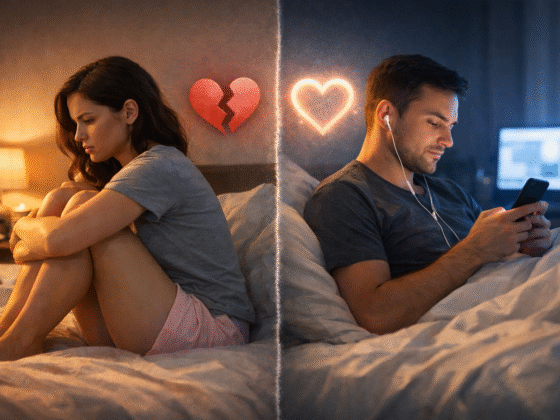
Couples don’t usually fracture overnight. But discovery of undisclosed porn use—especially when stumbled upon rather than openly shared—can lead to a breakdown in relationship trust. This distinction between disclosure vs. discovery is crucial: the former can build bridges, the latter often burns them.
Psychologists have long noted that attachment trust & intimate connection are particularly vulnerable to secrets. The lie, not the habit, becomes the real betrayal.
When Porn Redefines Expectations
Modern pornography often promotes unrealistic sexual standards. Bodies are sculpted, scenes are scripted, and emotions are erased. For couples, this can cause ripple effects:
- Partners may feel pressured to live up to sexual expectations that aren’t based in reality.
- Men, in particular, may experience erectile dysfunction or performance anxiety when real encounters don’t mirror fantasy.
- Women may internalize body image and self-esteem issues, believing they must conform to exaggerated ideals.
Over time, these effects can chip away at emotional intimacy, leading to a subtle but profound emotional distancing. And in many cases, individuals begin to rely on porn as a coping mechanism, retreating into it when vulnerability is needed most.
To counteract this distortion, some couples turn to physical solutions like Hydro7—not as a replacement for intimacy, but as a means to rebuild confidence and close the gap between reality and expectation.
Gender Differences: Shame, Silence, and Solo Habits
Research consistently reveals gender differences in effects of porn in relationships. While men are more likely to be the primary users, women tend to experience a sharper emotional impact when trust is broken.
For many, shame, guilt, and secrecy aren’t just side effects—they become central to the experience. The user may feel isolated by their habit; the partner may feel relational distress, interpreting the behavior as virtual infidelity.
And when the use is compulsive or habitual, it becomes harder to discuss or challenge without triggering defensiveness. This lack of honest dialogue only deepens the emotional chasm between partners.
But there’s hope. Restoring intimacy often begins with creating healthy sexual communication, supported by mutual understanding and non-judgmental tools. A good example is our Hydromax Lander, designed for couples interested in boosting confidence while staying connected.
In many relationships, mutual vs. solo use of pornography draws a thin but distinct line between curiosity and concern. It’s not necessarily the act of watching porn that disrupts the relationship—it’s how it’s integrated (or hidden) within the partnership.
Couples who openly discuss their views and create agreed boundaries around porn use often experience fewer issues. In these cases, porn can be neutral—or even additive—if it aligns with both partners’ values. But when one partner habitually watches in isolation and in secrecy, it often leads to:
- Emotional detachment or numbness during real intimacy
- Feelings of rejection or inadequacy in the non-using partner
- Escalation into porn addiction or sexual compulsivity, especially when paired with stress
“It’s not that porn kills love—it’s that silence starves it.”
Rather than ignore the divide, couples can prioritize open conversation about boundaries and initiate honest dialogue about how each person defines intimacy, fantasy, and fidelity. Resources like our Bathmate Accessories can aid in refocusing attention on mutual connection in the bedroom, reintroducing novelty without isolation.
Porn as a Dopamine Shortcut—and Why That Matters
What makes porn so sticky isn’t just the visuals—it’s the dopamine and neural conditioning that accompany frequent use. Each click delivers a reward. The brain learns to seek out novelty, rapid arousal, and effortless climax—none of which mirrors a real relationship.
This shift in stimulus can lead to:
- Decreased satisfaction in partner sex
- A need for increasingly extreme content to achieve the same effect
- Fantasy vs. reality distortion, where real intimacy feels dull or slow by comparison
In essence, porn becomes a shortcut. But in doing so, it often skips the very elements that make sex with a partner fulfilling: vulnerability, bonding, trust.
For men facing these challenges, solutions like the HydroXtreme UltraMale Kit offer more than just performance benefits—they signal a shift back toward intentional connection, focusing on the shared, not just the self.
Repairing the Rupture: When Porn Leads to Conflict
Unchecked, these patterns can trigger relationship instability and long-term conflict. But rather than pathologize all porn use, the key lies in recognizing when it creates relational transgressions—where boundaries are violated, either explicitly or implicitly.
If a partner feels emotionally cheated on—or if porn is used to avoid dealing with loneliness and isolation—then deeper issues are likely at play. It’s not unusual for couples to experience:
- Ongoing communication breakdowns
- Feelings of emotional abandonment
- Resentment due to perceived sexual dissatisfaction or disinterest
In these moments, relationship counseling or even guided self-help can be transformative. For couples open to exploring reconnection through physical confidence, the Pumps Collection offers an entry point into rebuilding sexual confidence and intimacy with mutual consent.
It’s Not About Morality—It’s About Meaning
Let’s be clear: this isn’t a morality tale. Porn in itself is not the enemy. But how it’s used—and how it’s hidden—can profoundly affect relationship dynamics. At the heart of the issue are very human needs:
- To feel chosen
- To feel desired
- To feel emotionally safe
And when those needs are disrupted, even unintentionally, they can fray the bonds that keep intimacy strong.
Rebuilding Trust and Connection: Where Do We Go From Here?
When the effects of pornography begin to surface in a relationship, they often show up as subtle shifts rather than dramatic collapses—less eye contact, shorter conversations, longer gaps in intimacy. But beneath those symptoms lies something deeper: a weakening of attachment trust and the shared belief that “we’re in this together.”
So, what does repair look like?
“It’s not just about stopping something—it’s about rebuilding something.”
It begins with vulnerability. Couples must relearn how to speak openly—not just about porn, but about what it represents: unmet needs, private anxieties, unspoken desires.
Here are some steps that can help:
- Name the Pattern
Acknowledge whether porn has been used to avoid discomfort, escape reality, or cope with stress. Recognizing porn as a coping mechanism is a crucial first step. - Reestablish Safety
Emotional safety must come before sexual healing. This includes revisiting healthy relationship boundaries, addressing past hurts, and validating each other’s experiences. - Reintroduce Physical Connection
For many couples, touch and closeness have become awkward or infrequent. Start small. Simple gestures. Eye contact. Shared showers. And when you’re ready, consider confidence tools that ease the transition—like our HydroXtreme Kit, which can support both physical and emotional reconnection. - Rewire the Script
Over time, porn can influence what we believe sex should look like. But real intimacy isn’t scripted. Reclaiming pleasure on your own terms might mean breaking away from those sexual scripts and exploring new dynamics that prioritize presence over performance.
Replacing Performance with Presence
It’s easy to think of porn in terms of visuals. But its real power lies in the narrative it builds—and that narrative often excludes mutual satisfaction, emotional vulnerability, and consensual negotiation. In contrast, strong relationships rely on:
- Sexual communication that invites feedback and play
- An understanding that pleasure is co-created, not performed
- A shared willingness to adapt and grow
In this context, bedroom tools become more than enhancers—they become invitations. Our homepage is filled with solutions for couples who want to explore not just harder erections, but deeper connection.
The Bottom Line: Is Porn the Problem—Or the Symptom?
The answer, frustratingly, is both. For some, porn use may be neutral or even connective. For others, especially when paired with secrecy, shame, or conflict, it becomes a wedge.
The difference lies in how couples:
- Communicate about their values
- Confront discomfort without blame
- Commit to rebuilding trust together
If porn is replacing emotional presence with passive escape, it’s time to ask: what’s missing, and how do we reclaim it?
You don’t need to throw away technology or fantasy. You just need to reclaim control—and rediscover each other in the process.
Final Thoughts
Porn is neither a monster nor a miracle. It’s a mirror—and what it reflects depends on the relationship behind it. By prioritizing honest dialogue, setting shared expectations, and engaging with each other in meaningful ways (both emotionally and physically), couples can not only survive the challenges of porn—they can become stronger because of them.
If you’re ready to take the first step toward more intimate, connected, and confident experiences, explore our full range of solutions—from the performance-enhancing HydroXtreme UltraMale Kit to our curated accessories—designed to support your growth as individuals and as partners.
Frequently Asked Questions: How Porn Affects Your Relationship
Here are the 10 most commonly asked questions about how porn impacts relationships—with clear, honest answers grounded in research and relational psychology. These questions touch on aspects not already covered in the main body of the article, offering additional insight for couples and individuals alike.
1. Is watching porn considered cheating in a relationship?
It depends on the couple’s agreed boundaries. While some partners may view solo porn use as harmless, others may consider it a form of virtual infidelity if it feels like a breach of trust or secrecy. Open communication about expectations is essential.
2. Can porn ever be a healthy part of a relationship?
Yes—when it’s used mutually and consensually, porn can enhance intimacy, spark arousal, or serve as a tool for exploration. The key is alignment: both partners should feel comfortable, respected, and equally engaged in how it’s used.
3. Why does porn use sometimes feel like rejection to the other partner?
Because it can be interpreted as a substitute for real intimacy, especially when accompanied by emotional distance or a decrease in sexual connection. This perception often stems from unmet needs for validation, affection, or closeness.
4. Can porn affect how someone sees their partner sexually?
Yes. Repeated exposure to highly stylized content can subtly influence a person’s sexual expectations, making real-life sex feel less exciting or satisfying. This is one of the reasons fantasy vs. reality distortion can become problematic in long-term relationships.
5. Is it possible to become desensitized to real sex from too much porn use?
Absolutely. Over time, frequent viewing—especially of novel or extreme content—can condition the brain to respond only to highly specific stimuli. This may lead to compulsive use, emotional detachment, and sexual performance issues with a real partner.
6. What should I do if my partner watches porn and I’m not comfortable with it?
Start with an open, non-judgmental conversation. Avoid accusations and instead focus on how it makes you feel. Work together to create agreed boundaries that honor both of your values and needs.
7. Can watching porn together improve our sex life?
In some cases, yes. Mutual use of erotica can lead to increased arousal, new ideas, and deeper connection—if both partners are on board. However, it should never replace genuine intimacy or communication.
8. How do I know if my partner’s porn use is becoming a problem?
Signs include secrecy, compulsive behavior, sexual dissatisfaction, decreased interest in real sex, and emotional withdrawal. If porn use is interfering with relationship quality, it may be time to seek support, such as couples therapy.
9. Are there physical signs that porn is affecting sexual health?
Yes. Erectile dysfunction, difficulty climaxing with a partner, and reliance on visual stimulation for arousal can be linked to excessive porn use. These symptoms often reverse with behavior changes and, when needed, tools like the HydroXtreme Pump.
10. What are healthy alternatives to porn for couples seeking more excitement?
Try exploring sensual communication, novelty in the bedroom, body confidence tools like Hydro7, erotic literature, mutual fantasies, or guided intimacy exercises. The goal is to rediscover arousal as a shared experience, not a solitary escape.